Top 11 Retail Media Advertising Platforms (2026)
On this page
- NEXUS: One of the best retail media advertising platforms with one seat for onsite sponsored placements and offsite across seven channels, plus a native clean room on AWS or Snowflake for first-party matching and impression-level logs.
- Amazon Ads: Ideal for any brand with Amazon distribution.
- Criteo: Cross-retailer onsite and offsite buying from one DSP seat.
- Topsort: A self-serve engine; offsite via Google, Meta, TikTok, and The Trade Desk, no clean room.

The best retail media advertising platforms are competing for a budget that will approach $70 billion in the U.S. in 2026, growing faster than any other digital channel.
If you run programmatic retail media marketing for clients, you need to know which networks deserve a line on the plan, which you can buy from a seat you already manage, and which let you prove results with numbers the retailer didn’t hand you.
The best retail media advertising platforms make the shortlist for three reasons: inventory, buying access, and data and measurement. We scored the field on those criteria and kept the 11 that matter in 2026.
How We Grouped the Retail Media Advertising Platforms
Platforms are listed by layer, starting with full-stack. Order within a layer is not a ranking.
- Full-stack platforms (NEXUS): a retail media DSP for buyers and a Commerce Media Platform for operators.
- Retailer-owned networks (Amazon Ads, Walmart Connect, Target Roundel, Instacart Ads): where CPG and marketplace budget lands. Each is a walled garden.
- Cross-retailer DSPs and management layers (Criteo, Epsilon Retail Media, The Trade Desk, Pacvue): how an agency buys across networks and extends shopper audiences offsite through programmatic advertising.
- Network infrastructure (Topsort, Kevel): the software that a retailer runs its network on. You buy through whatever buyer interface the retailer exposes, and the software decides the inventory, data, and reporting you get.
For a brand-side view of the same category, see best retail media platforms for brands.
See where NEXUS fits among retail media platforms.
11 Best Retail Media Advertising Platforms
The retail media platforms comparison below covers 11 platforms at a glance.
| Platform | Type | Onsite sponsored | Offsite channels | Audience data and clean room | Operator stack | Verification |
| NEXUS | Full-stack (DSP + Commerce Media Platform) | Yes, NEXUS-powered networks | Display, native, CTV, DOOH, audio, in-app, mobile web | Operator match + ~300M profiles / ~1,000 segments refreshed daily; native DCR on AWS or Snowflake | Pre-built SP / SB / Onsite Display, operator admin, white-label theming; Shopify, BigCommerce, Magento, Salesforce Commerce, custom API; under 30 days | IAS, DoubleVerify pre-bid; impression-level audit logs |
| Amazon Ads | Retailer-owned | Yes | Display, video, audio, CTV | Amazon Marketing Cloud (AWS only) | N/A | IAS, DoubleVerify, Amazon native |
| Walmart Connect | Retailer-owned | Yes | Display, video, CTV via Walmart DSP (TTD); in-store | Online + store data; clean room via TTD | N/A | IAS, DoubleVerify via TTD |
| Target Roundel | Retailer-owned | Yes | Display, video | Target guest data; limited clean room | N/A | Partner-dependent |
| Instacart Ads | Retailer-owned | Yes | Limited | Basket-level data; no advertiser clean room | N/A | Partner-dependent |
| Criteo | Cross-retailer DSP + operator platform | Yes, partner retailers | Display, native, video, CTV | Clean room via Commerce Yield | SP / SB / display; operator admin; four connectors | IAS, DoubleVerify |
| Epsilon Retail Media | Cross-retailer network + operator platform | Yes, partner grocers | Display, video via Epsilon identity | Clean room via Epsilon | SP / SB / display; four connectors | IAS, DoubleVerify |
| The Trade Desk | Offsite DSP | No | Display, video, CTV, audio, DOOH | Retailer partnerships via Galileo; UID2 | N/A | IAS, DoubleVerify |
| Pacvue | Management layer | Via retailer APIs | None | Retailer-reported | N/A | N/A |
| Kevel | Infrastructure | Via each retailer’s own portal | No native offsite extension | Retailer-controlled first-party data; no native clean room | Build: APIs only, multi-quarter, retailer supplies buyer UI and demand | Depends on retailer integration; no platform-level standard |
| Topsort | Infrastructure | Yes | Google, Meta, TikTok, The Trade Desk | Marketplace data; no clean room | SP / limited SB / display; self-serve dashboard; Shopify, BigCommerce | Partner-dependent |
1. NEXUS: Full-Stack Retail Media Platform (DSP + Clean Room)
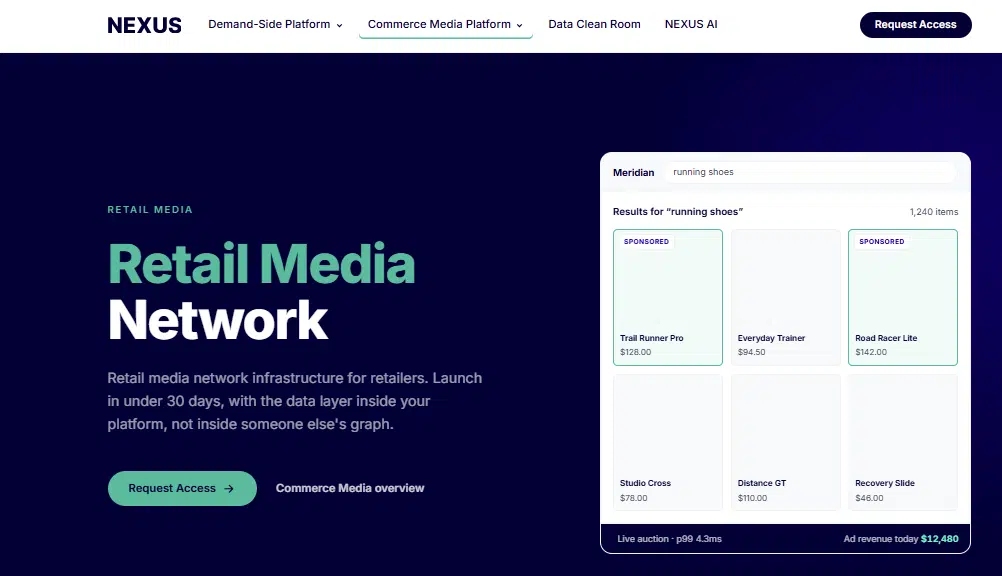
NEXUS is a retail media advertising platform with a DSP and a Commerce Media Platform on one stack. For buyers, that means the shopper audiences of every retailer and marketplace running on NEXUS are reachable from a single DSP seat, across seven offsite channels and 70+ supply integrations, alongside the onsite sponsored inventory on those sites. Bidding runs at about 100 ms median latency and 5M+ peak QPS.
Key features
- Targeting on six dimensions (geo, behavioral, contextual, custom, lookalike, retargeting), ~300M person profiles, and ~1,000 pre-built segments refreshed daily.
- Native data clean room: match, enrich, and activate retailer first-party shopper data on AWS or Snowflake.
- Impression-level audit logs, with IAS and DoubleVerify brand safety verification pre-bid.
- Reporting on ~80 dimensions with hourly latency and CSV or API export.
- Identity: NEXUS native ID, UID2, and ID5.
Downside: In-store is on the roadmap, not in the current release.
Best for
- Agencies: whose clients sell through mid-market retailers and marketplaces and want those networks bought from one seat.
- Retailers and marketplaces: a pre-built ad unit catalog, an operator admin for campaign, advertiser, and reporting management, white-label operator-branded theming, and pre-built commerce integrations (Shopify, BigCommerce, Magento, Salesforce Commerce) or a custom API. Offsite Extension runs through the NEXUS DSP integration. Launch under 30 days.
2. Amazon Ads: Onsite, Amazon DSP, and Marketing Cloud
Amazon Ads is the largest retail media network by spend. It accounted for over 75% of all U.S. retail media ad spending in 2025. Amazon Ads combines onsite sponsored formats, Amazon DSP for offsite reach, and Amazon Marketing Cloud, a native clean room on AWS.
Key features
- Run Sponsored Products, Brands, and Display against Amazon search and product pages.
- Extend to display, video, audio, and CTV through Amazon DSP.
- Query conversion paths in Amazon Marketing Cloud.
Downside: Amazon Marketing Cloud runs on AWS only, so Snowflake-based teams need a second workflow.
Best for: Any brand with Amazon distribution.
3. Walmart Connect: Onsite and In-Store Attribution for CPG
Walmart Connect combines onsite search and display across Walmart.com and Walmart’s U.S. store footprint. Attribution covers online and in-store sales.
Key features
- Buy onsite search and display with attribution to online and store sales.
- Add in-store screens and sampling for launches.
Downsides: Offsite buying requires a separate Walmart DSP seat. Audiences are locked to Walmart’s inventory and partners.
Best for: CPG brands with Walmart distribution.
4. Target Roundel: Guest Data and Sponsored Placements
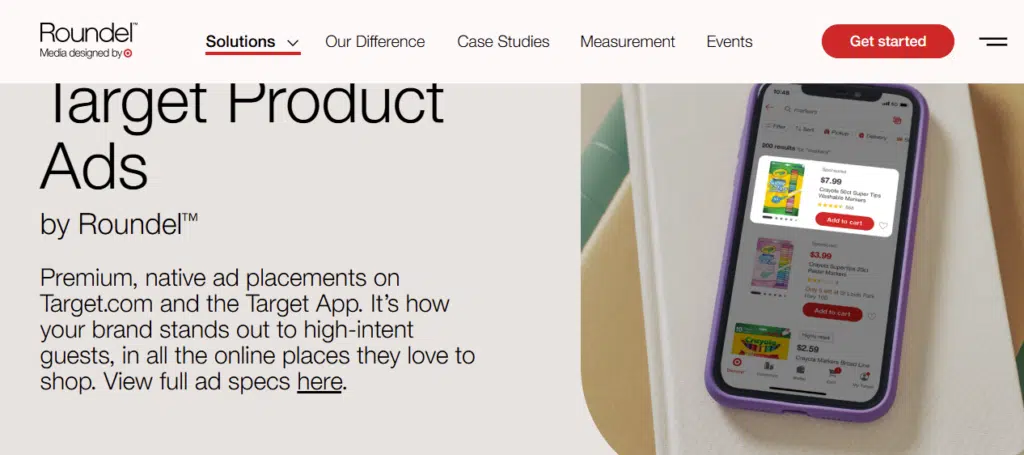
Roundel is Target’s in-house network, built on guest data from Target.com and roughly 2,000 stores. Its category is home, apparel, and beauty.
Key features
- Reach Target shoppers with sponsored and display placements.
- Extend to display and video using Target’s guest audiences.
Downsides: Offsite is limited to display and video. Clean room access is limited. Self-serve tooling is less developed than Amazon’s or Walmart’s.
Best for: Brands in Target’s core categories.
5. Instacart Ads: Basket-Level Grocery Conversion
Instacart Ads sells sponsored products and display with basket-level attribution across grocers from a single buy. Placement happens while the shopper builds a basket.
Key features
- Buy sponsored placements at the moment of basket build.
- Measure attribution across every grocer on Instacart from one report.
Downsides: Limited offsite extension. No clean room access for advertisers.
Best for: CPG brands prioritizing onsite conversion in grocery.
6. Criteo: Cross-Retailer DSP for Onsite and Offsite
For cross-retailer retail media buying, Criteo runs Commerce Max for buyers and a white-label monetization platform (Commerce Yield). Onsite and offsite buying run from one seat, with IAS and DoubleVerify verification.
Key features
- Buy onsite sponsored products and offsite display, native, video, and CTV across partner retailers from one seat.
- Access clean room matching through Commerce Yield.
- Deploy on Shopify, BigCommerce, Magento, and Salesforce Commerce.
Downsides: Clean room matching runs through Commerce Yield, not natively in the DSP. In-store is limited.
Best for: Agencies consolidating onsite buys across retailer footprint in one DSP.
7. Epsilon Retail Media: Grocery Network with Identity-Led Offsite

Epsilon Retail Media combines the former CitrusAd onsite stack with the Epsilon identity graph for offsite reach. Its partner list is concentrated in grocery.
Key features
- Buy sponsored products, brands, and display on partner grocers.
- Extend offsite using Epsilon identity.
Downside: Clean room access runs via Epsilon, not natively.
Best for: Agency portfolios concentrated in grocery.
8. The Trade Desk: Retailer Audiences on the Open Web and CTV
The Trade Desk reaches retail media through retailer data partnerships rather than on-site inventory. Retailer audiences from a range of grocers and mass merchants are onboarded through Galileo for activation across open web, CTV, audio, and DOOH.
Key features
- Onboard first-party and retailer data through Galileo and UID2
- Measure with IAS and DoubleVerify integrations.
Downsides: The retailer’s own search and product-page inventory is bought elsewhere. Closed-loop sales attribution is retailer-supplied rather than native.
Best for: Agencies already on a TTD seat.
9. Pacvue: Sponsored Product Management Across Networks
Pacvue is a sponsored-product management layer across Amazon, Walmart, Instacart, Target, and other networks. It unifies bidding, budgeting, and share-of-voice reporting.
Key features
- Automate bids and budgets across networks from one interface.
- Monitor share of voice, inventory, and pricing by retailer.
Downsides: No DSP and no offsite inventory.
Best for: Agencies running three or more networks per client.
10. Kevel: API-First Ad Server Infrastructure
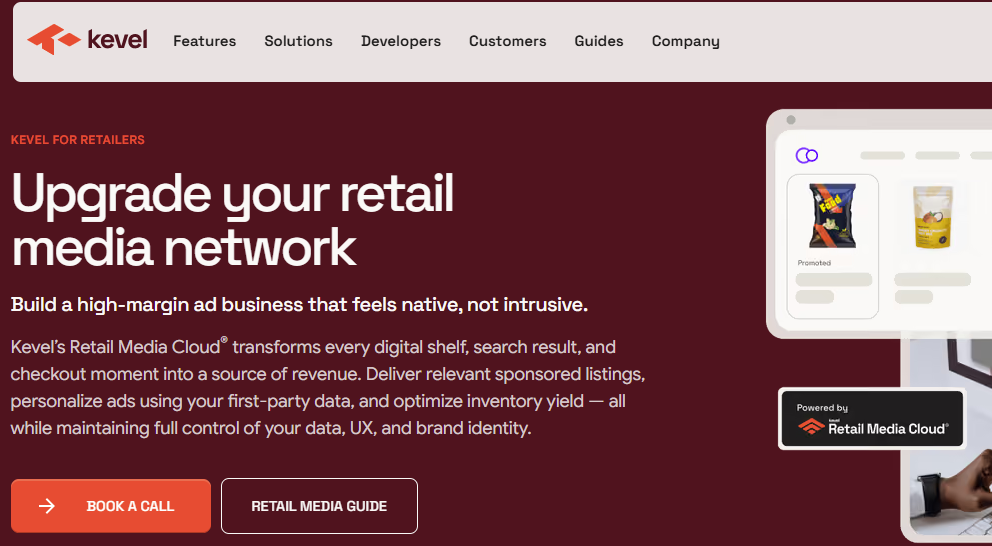
Kevel is an API-first ad-serving and decisioning platform that retailers use to build their own retail media networks. From the agency side, every Kevel-powered network is a separate seat.
Key features
- Onsite sponsored listings and display, bought through each retailer’s own portal.
- Retailer-controlled first-party data, with access and segmentation set network by network.
Downsides: No unified seat. No native offsite extension, DSP, or clean room.
Best for: Agencies whose clients sell on Kevel-powered retailers.
11. Topsort: Self-Serve Retail Media Platform
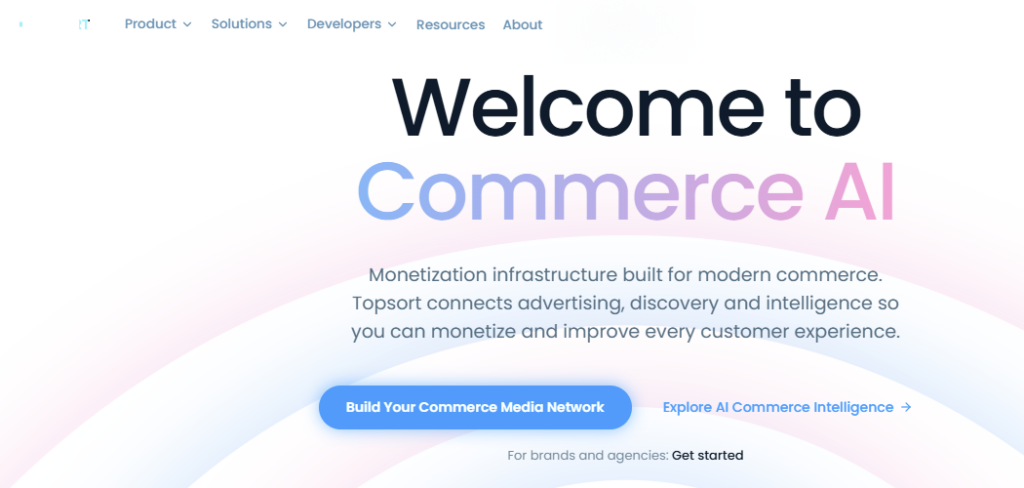
Topsort is a self-serve engine that serves sponsored products and onsite banners. You can push the same vendor-funded budget offsite to Google, Meta, TikTok, and The Trade Desk.
Key features
- Buy sponsored products and onsite display through a relevance-weighted auction.
- Access every Topsort-powered marketplace with the same campaign mechanics.
Downsides: No clean room. Sponsored Brands is thin. Verification is partner-dependent.
Best for: Brands with distribution on Topsort-powered marketplaces.
See how NEXUS runs this on your data
Everything in this article runs on NEXUS today. See the Commerce Media Platform page.
How to Choose a Retail Media Platform
Ask each vendor:
- Which retailer audiences can I reach, and are they matched in a clean room or passed as raw segments?
- Which identity solutions are supported?
- Can I see the supply path, the fee as a percentage of media, and an impression-level log?
- Which brand safety and IVT partners run pre-bid?
- How is attribution deduplicated between onsite and offsite?
On retail media platform pricing: media is auction-based (CPC or CPM); management layers charge SaaS or a share of spend; infrastructure charges operators SaaS, revenue share, or both.
Ask whether reporting, clean room access, and offsite are included.
For the wider programmatic view, see the best platforms for programmatic advertising in retail.
Among the best retail media advertising platforms, NEXUS is the one that runs onsite (Commerce Media Platform) and offsite (NEXUS DSP) on one stack, so extending a campaign doesn’t mean a second DSP seat or a second login.
Request Access and compare NEXUS yourself.
Takeaways
- Buy in layers, report in one place. Walled gardens keep their onsite inventory; cross-retailer platforms consolidate the rest. Pick the seat that gives you one audit log across both.
- Match your data, don't rent theirs. A native clean room lets you match your first-party file against retailer data without either side exporting records.
- Verify the numbers you're quoted. Ask for impression-level logs and fees disclosed as a percentage of media; if a platform can't provide either, price that into the CPM.
- For operators, launch time is the cost. Pre-built ad units, operator admin, white-label theming, and commerce connectors put a network live in under 30 days instead of a multi-quarter build.
Frequently asked questions
The best retail media advertising platform for a small brand is the network where it already has distribution. Once you run more than one, a cross-retailer seat, such as Criteo or NEXUS DSP, consolidates reporting and offsite extension without adding a login per retailer.
You need a separate seat for each walled garden (Amazon, Walmart, Target, Instacart), but cross-retailer platforms consolidate the rest. On NEXUS-powered networks, onsite and offsite are bought from one seat — See how it works.
Retail media advertising platforms charge auction-based media (CPC or CPM) plus a platform fee that ranges from a SaaS subscription to a share of spend. NEXUS is full-stack, with the platform fee disclosed as a percentage of media
For buying, Walmart Connect and Instacart carry the volume, with Criteo or NEXUS DSP for offsite extension. For grocers launching a network, NEXUS and Epsilon offer clean-room matching and offsite.
A retail media network is a retailer's ad business, for example, Walmart Connect. A retail media platform is the software behind it: NEXUS powers retailer networks (Commerce Media Platform) and gives buyers a DSP to reach them, on one stack, deployable in under 30 days.



Request access to NEXUS
See how this runs on your own data. Request access to get started.
Request Access