Criteo Alternatives and Competitors: Top Picks for 2026
On this page
- NEXUS, The Trade Desk, Google Display & Video 360, Amazon, Adform, Adobe, RTB House, Quantcast, Basis and InMobi are the top Criteo competitors.
- Because Criteo is both a Demand-Side Platform (known as DSP) and a commerce media company, buyers are looking for alternatives that can fill both of these roles.
- NEXUS has a native Data Clean Room with AWS and Snowflake support, plus impression-level audit logs.
- The Trade Desk boasts a larger auction scale than NEXUS (13 million queries per second vs. 5 million plus), while RTB House focuses heavily on retargeting and InMobi has strong in-app features.
- NEXUS is for large agencies and brands with strict Know Your Business (KYB) processes and gated access, a $30,000 minimum deposit, and a $500-per-day minimum ad spend.

Depending on how your trading desk operates, there are many possible Criteo competitors, from standalone DSPs to those that come as part of a larger suite. If you’re currently using Criteo for retargeting or ecommerce advertising and want to see what else is out there, this guide will help.
Here are ten of the best Criteo alternatives you might consider; we’ve also included one that’s been discontinued (for the sake of completeness).
Why agencies look beyond Criteo
Criteo competitors are worth comparing because Criteo spans both DSP and commerce media. Brands and agencies are the focus of Commerce Max, a solution provided by the platform; retailers along with marketplaces turn to Commerce Yield, an opportunity through which they may monetize their advertising spaces as well as capitalize on their first-party data.
This has thrown up questions when people try to decide which products to shortlist, namely: How many channels does the platform cover? How transparent is it about where the money goes? And, crucially, does it integrate programmatic buying with commerce media on a single platform?
See how NEXUS compares to Criteo
Criteo alternatives compared
| Platform | Best for | Channels | Access |
| NEXUS | DSP and commerce media on one platform | Display, native, CTV, DOOH, audio, in-app, mobile web | Gated access; $30,000 minimum deposit, $500 minimum daily spend |
| The Trade Desk | Scale and CTV | CTV, display, video, mobile, audio, DOOH, native | Not stated |
| Google DV360 | Enterprise teams, YouTube | YouTube, third-party exchanges | Via Google sales |
| Amazon DVA | Teams buying inside Amazon’s ecosystem | Display, video, audio | DVA+: no minimum spend; managed service typically $50,000 |
| Adform | DOOH and omnichannel | Display, audio, video, CTV, DOOH, mobile, in-app | Contact sales |
| Adobe Advertising DSP | Teams using Adobe’s marketing tools | Display, video, CTV | Consultation |
| RTB House | Retargeting, shoppable creative | Web and app | Contact sales |
| Quantcast | Performance marketers | CTV, audio, video, display, mobile, native | Demo request |
| Basis | Search, social and display in one DSP | CTV, video, native, audio, display, mobile, DOOH | Contact sales |
| InMobi | Mobile app growth | In-app and mobile web | Demo request |
| Microsoft Invest | N/A | N/A | Now discontinued (28th February 2026) |
1. NEXUS: DSP and Commerce Media in One
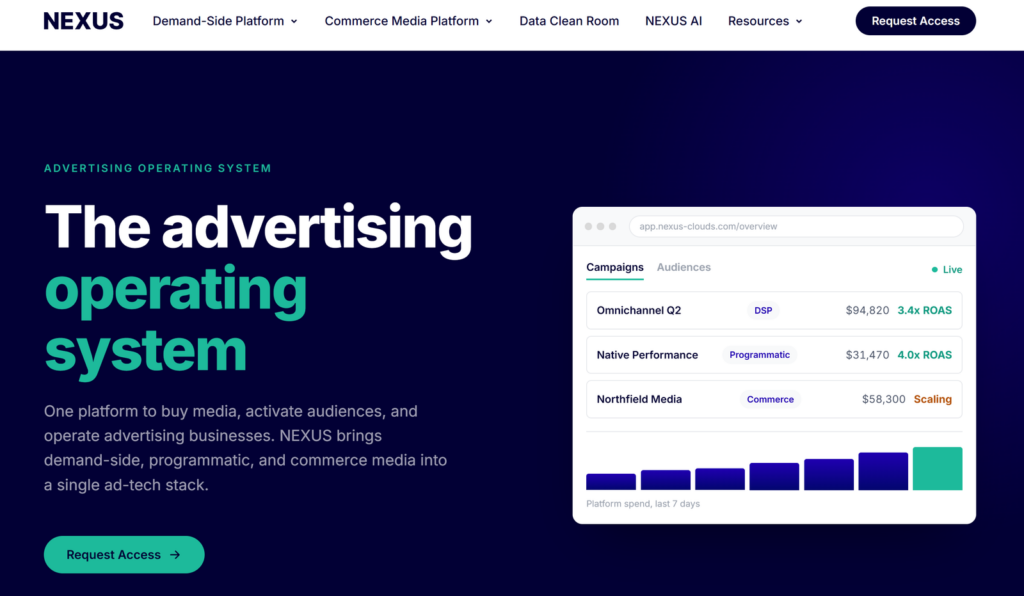
NEXUS is an Advertising OS that combines a Demand-Side Platform, Programmatic Ad Networks and Commerce Media. It offers various ad formats such as Sponsored Products, Sponsored Brands, and Onsite Display. The platform runs an auction with over 5 million queries per second, reaches about 300 million profiles, and has six targeting dimensions and four identity solutions, including a native ID and UID2.
Criteo Commerce Yield allows retailers to monetize their first-party data and audiences through Criteo’s OneTag or a CDP partner. NEXUS uses a different approach with its native Data Clean Room with AWS and Snowflake support.
Transparency features include impression-level audit logs, percentage-of-media fee disclosure, ads.txt, and sellers.json. The platform is built for large brands and agencies. It requires strict KYB checks before giving access to any agency or brand. There’s also a $30,000 minimum deposit needed along with a $500 minimum daily spend on ads.
2. The Trade Desk: Scale and CTV Reach
If you’re looking for an all-in-one DSP for CTV, display, video, mobile, audio, DOOH and native ads, The Trade Desk could be a good fit. Its Kokai platform includes an AI co-pilot named “Koa” with AI forecasting.
The Trade Desk’s auction platform runs at more than 13 million queries per second (QPS) – that’s above NEXUS’ 5 million-plus. They don’t publicly share their pricing or minimums.
3. Google Display & Video 360

DV360 is a platform where you can buy ads across YouTube and a number of different exchanges. It uses machine learning to help optimize bidding.
As it integrates with other Google products, DV360 suits advertising agencies that already use these products. If you’re interested in trying DV360, you can do so by contacting a Google sales representative.
4. Amazon DVA: Display, Video and Audio
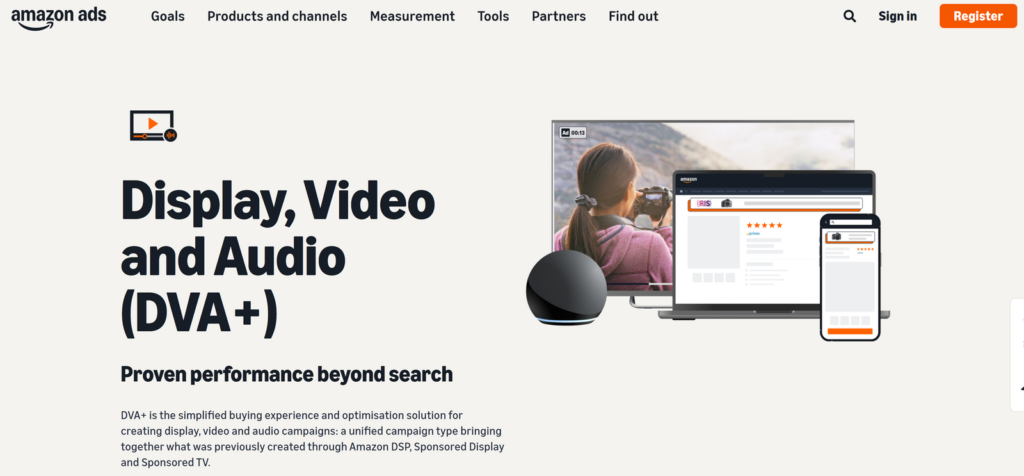
Amazon has rebranded its Amazon DSP as DVA (display, video and audio). DVA+ is the default campaign type here. When setting up a DVA+ campaign, the platform chooses between performance and brand (based on your campaign objectives).
If your clients are already selling on Amazon, then making use of this service may suit them.
5. Adform: Strong on DOOH Planning

Adform’s DSP includes display, audio, video, CTV, DOOH, mobile and in-app. The firm claims it was the first global DSP to introduce a channel-specific DOOH workflow, so it stands out for out-of-home media planning.
6. Adobe Advertising DSP: Part of Adobe’s Stack
Adobe’s DSP is described as a platform that unites media buying and makes it more efficient across different channels, ad formats and publishers. It does this by providing access to display, video, and connected TV advertising. They offer access to premium CTV inventory (and ads that run on connected TVs).
The platform integrates with other Adobe marketing products, so if your company already uses them, this could be a good choice for you.
Access starts with a consultation from the Adobe sales team.
7. RTB House: Retargeting Specialist
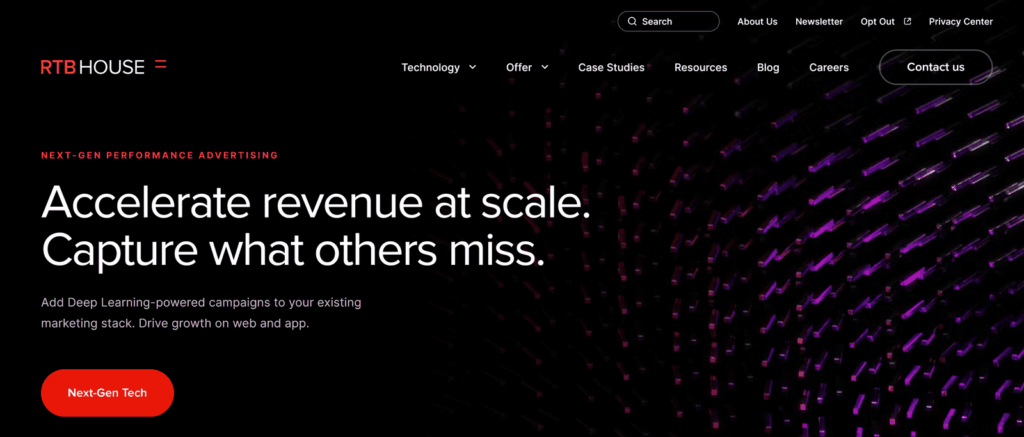
RTB House describes itself as a performance DSP that uses deep learning and first-party data. Its services include retargeting, customer acquisition and shoppable creative ads for websites and apps. These also include dynamic product ads which show individual recommendations based on first-party signals.
The platform works across fewer channels than others do, but this focus allows them to compete directly with Criteo when it comes to retargeting campaigns specifically.
8. Quantcast: Performance-Led DSP
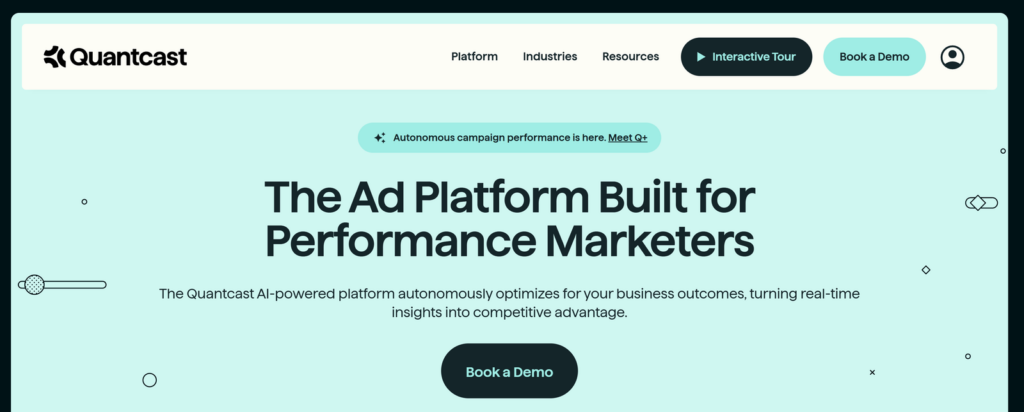
Quantcast has positioned its demand-side platform as a tool for performance marketers, emphasizing its AI-driven optimization capabilities across connected TV, audio, video, display, mobile and native advertising.
That said, its pages don’t list prices or minimum spending requirements.
9. Basis: Search, Social and DSP
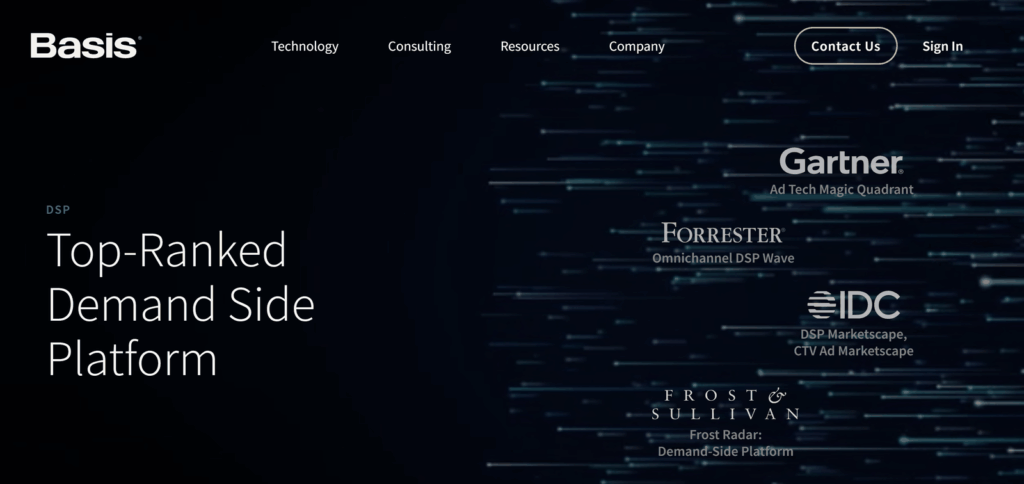
According to Basis, their platform is the only demand-side platform to integrate search, social and site direct on a single interface. They offer CTV, video, native, audio, display, mobile and DOOH advertising, plus more than 25,000 audience segments.
10. InMobi: In-App Performance

InMobi refers to its demand-side platform as a performance marketing platform for in-app programmatic advertising; it’s designed specifically for mobile app installs and retention. The DSP uses attribution and optimizes campaigns based on installs and lifetime value, rather than just clicks.
In short, the platform is well-suited for app marketers who need a specialized solution, but if you’re looking for a general Criteo replacement, this may not be the right platform for you.
11. Microsoft Invest
Microsoft declared its plan to shut down Microsoft Invest (previously known as Xandr DSP). The company’s now concentrating its buy-side tech on the Microsoft Advertising Platform for the future.
Talk to our team about an alternative to Criteo
See how NEXUS runs this on your data
Everything in this article runs on NEXUS today. See the Demand-Side Platform page.
How to choose a Criteo alternative
Start with the task at hand. If retargeting is the main reason you’re looking at Criteo alternatives for ecommerce, look into RTB House as well. For CTV and scaling purposes, The Trade Desk should be on your comparison list. If your target audience comprises predominantly mobile app users, consider comparing it against InMobi. Alternatively, if you desire a single platform that offers both DSP and commerce media services with audit logs for verification, be sure to include NEXUS in your comparison.
The next factor here is access. There are a number of platforms in this space that don’t readily provide information on pricing or minimum requirements – so it’s wise to inquire about this from each of them before you narrow your options down.
For the cases where reliability matters most, refer to our top DSPs for ad agencies guide.
Choosing Among Criteo Competitors
Criteo competitors vary greatly when it comes to channels, scale, and access. Choose a platform that suits your buying desk’s needs and request a demo from each vendor on your shortlist.
Request Access and compare NEXUS yourself
Takeaways
- Identify your current usage with Criteo including retargeting, commerce media or both along with client or campaign specifics.
- Assign jobs to platforms. For example, RTB House does retargeting, The Trade Desk handles scale/CTV, InMobi fits mobile apps while NEXUS covers DSP and commerce media on a single platform.
- Narrow down your choices to two or three platforms but eliminate any that have closed, like Microsoft Invest.
- Inquire about prices, minimum spend and terms before scheduling demos since some providers don’t disclose these publicly upfront.
- Investigate transparency: what kind of reports are provided; can one see impression-level logs and fee terms?
- If NEXUS features in your final selection, check the fit first, as access is gated, with strict KYB checks, a $30,000 minimum deposit and a $500 minimum daily spend.
Frequently asked questions
Some of the main competitors include The Trade Desk, Google Display & Video 360, Amazon, Adform, Adobe, RTB House, Quantcast, Basis and InMobi. Alongside these, NEXUS stands out as a comprehensive full-stack alternative that offers services in both DSP and commerce media.
No platform on this list is free, including NEXUS, which doesn’t offer free access because it has strict KYB requirements along with a $30,000 minimum deposit and a $500 minimum daily spend.
Both. The company Criteo works in two areas: retargeting and performance buying as a DSP, and commerce media for retailers and brands. NEXUS, likewise, covers DSP and commerce media in a single platform.
Small ecommerce shops are not the main audience for most of these Criteo alternatives. NEXUS caters to large agencies and brands, so it isn’t a fit for small businesses.
Advertisers have diverse reasons for switching to different platforms. Common considerations are channel coverage, reporting clarity and having a single platform for programmatic and commerce media. NEXUS provides impression-level audit logs as well as a percentage-of-media fee disclosure.



Request access to NEXUS
See how this runs on your own data. Request access to get started.
Request Access