Moloco Competitors: 9 Platforms Advertisers Use in 2026
On this page
- Moloco competitors offer alternatives for mobile advertising, programmatic media buying, and retail media.
- NEXUS: combines DSP buying, programmatic ad networks, and commerce media in one Advertising OS.
- The Trade Desk: provides omnichannel programmatic media buying for agencies and advertisers.
- Adform: combines programmatic buying, ad serving, and campaign management.
- Criteo: offers commerce media solutions for advertisers, retailers, and publishers.

Moloco competitors include platforms built for mobile app advertising, programmatic media buying, and retail media. But they don’t all solve the same problem. Some focus on helping app developers acquire users, while others give agencies more control over media buying or help retailers sell advertising space on their platforms.
Moloco has products for both app marketers and commerce media operators. If you’re comparing Moloco alternatives, the first step is to know which part of its offering you want to replace.
This guide looks at 9 Moloco alternatives, what each platform offers, who it’s best suited for, and how much it costs to get started.
New to programmatic advertising? Check our glossary for demand side platform meaning.
9 Moloco Competitors: A Quick Look
| Platform | Best for | Standout feature | Price starting from |
| NEXUS | Mid- and large agencies and brands | DSP, ad network, and commerce media in one Advertising OS | $30,000 minimum deposit; $500 minimum daily spend |
| The Trade Desk | Large agencies and advertisers | Omnichannel programmatic media buying | Custom pricing, contact sales |
| Adform | Agencies and advertisers | Integrated DSP and ad server | Custom pricing, contact sales |
| StackAdapt | Agencies and mid-market advertisers | Cross-channel campaign management | 5 custom-pricing tiers; no minimum spend |
| Liftoff | Mobile app marketers | AI-powered user acquisition and re-engagement | Custom pricing, contact sales |
| InMobi | Mobile advertisers | Mobile audience targeting and app growth | Custom pricing; consult the InMobi team |
| AppLovin | Performance marketers and app developers | Axon AI campaign optimization | Custom pricing; contact sales |
| Criteo | Retailers, brands, and agencies | Commerce media and retail advertising | Custom pricing; contact sales |
| Topsort | Retailers and marketplaces | API-based retail media infrastructure | Custom pricing; contact sales |
Note: Most Moloco DSP alternatives do not publish standard starting prices. Their fees depend on the agreement and campaign requirements. NEXUS has no lower entry option.
1. NEXUS: Operating system for unified advertising operations
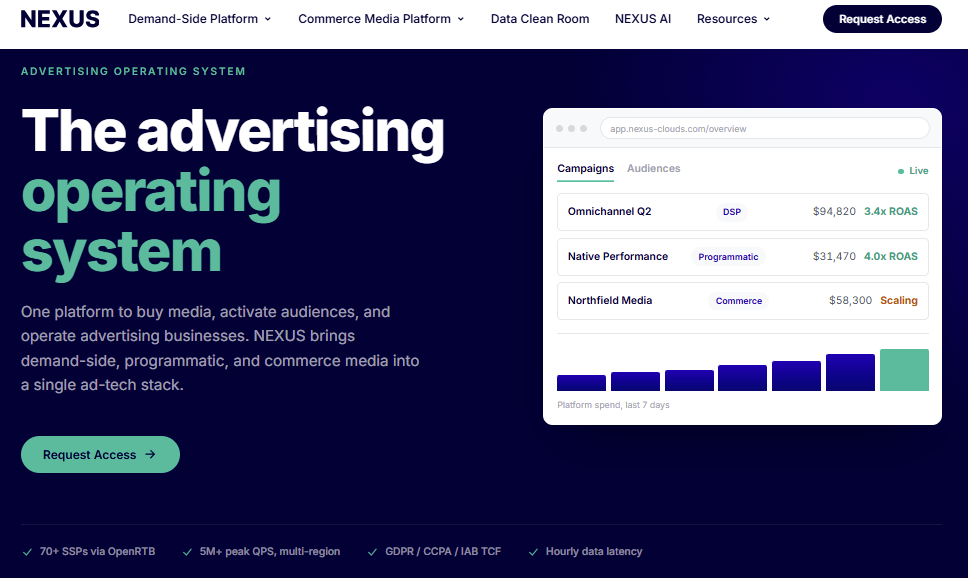
NEXUS is an Advertising Operating System (OS) comprising programmatic buying, audience activation, and commerce media infrastructure. The three pillars of NEXUS are: demand-side platform (DSP), Programmatic Ad Networks, and a Commerce Media Platform.
Where NEXUS shines
- Access to over 70 SSP and exchange integrations across seven advertising channels.
- Supports roughly 300M profiles, approximately 1,000 audience segments, and 6 targeting dimensions.
- NEXUS AI for predictive bidding and campaign optimization.
- Other key features include lookalike modeling and a native Data Clean Room.
- Clear fee disclosure and audit logs for every campaign.
Where NEXUS falls short
- Has gated access with strict KYB requirements, not an open self-serve registration.
- The $30,000 minimum deposit and $500 minimum daily spend may limit advertisers with smaller ad budgets.
What’s NEXUS pricing
- $30,000 minimum deposit; $500 minimum daily spend.
Who NEXUS is best for
- Large agencies, brands, and commerce operators seeking broader advertising infrastructure.
See how NEXUS compares to Moloco.
2. The Trade Desk: For omnichannel programmatic buying
The Trade Desk is a DSP platform for advertisers and agencies. It enables ad buyers to use premium open-internet inventory.
Where The Trade Desk shines
- Supports omnichannel programmatic buys for premium open Internet inventory.
- Offers targeting based on both first- and third-party data, along with identity and measurement solutions.
Where The Trade Desk falls short
- Retailers interested in creating their own retail media network require a retail media platform.
What’s The Trade Desk pricing
- Custom pricing; contact sales
Who The Trade Desk is best for
- Agencies and advertisers that run programmatic campaigns on open-internet inventory.
3. Adform: For integrated media buying and ad serving
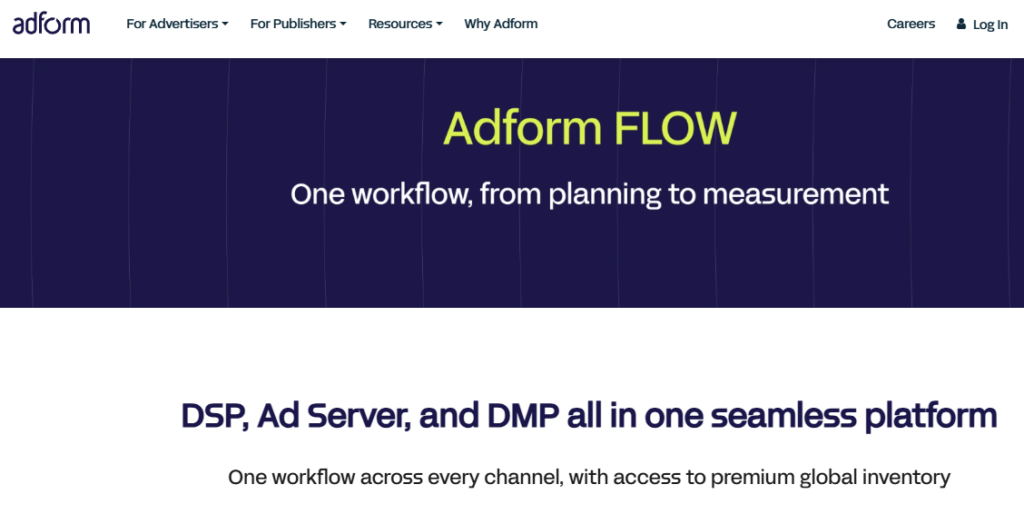
Adform offers an all-in-one platform for programmatic media buying and campaign management.
Where Adform shines
- Programmatic buying in display, audio, video, CTV, DOOH, mobile, and in-app.
- Ad server that integrates with all of the above to execute campaigns.
Where Adform falls short
- DSP, ad server, and DMP are separate products. Ensure that everything you need is covered by your contract.
- Some features may not be available depending on how you configured your products and what markets you operate in.
What’s Adform pricing
- Custom pricing; contact sales
Who Adform is best for
- Agencies and trading desks that want programmatic buying, audience management, and ad serving under one tech umbrella.
4. StackAdapt: For cross-channel campaign management
StackAdapt is a platform for the planning, execution, and measurement of programmatic digital advertising campaigns. It supports various channels, including display, native, video, connected TV (CTV), audio, in-game, and Digital Out-of-Home (DOOH).
Where StackAdapt shines
- Supports campaign management on various digital channels on one platform.
- Offers programmatic campaign planning and execution services for agencies and advertisers.
Where StackAdapt falls short
- Not built specifically for retailers that want to operate their own advertising networks.
What’s StackAdapt pricing
- 5 custom pricing tiers; contact sales for a quote
- No minimum spend
Who StackAdapt is best for
- Agencies and media buyers dealing with programmatic cross-channel campaigns.
5. Liftoff: For mobile app user acquisition
Liftoff is focused on the areas of mobile application growth and monetization.
Where Liftoff shines
- The platform helps acquire mobile app users and re-engage them.
- The company has an app monetization service and provides Vungle Exchange inventory access.
Where Liftoff falls short
- Its specialization is limited to mobile advertising rather than a general-purpose omnichannel DSP.
What’s Liftoff pricing
- Custom pricing; contact sales
Who Liftoff is best for
- Mobile app publishers and game developers focused on post-install retention.
6. InMobi: For mobile advertising and app growth
InMobi is an adtech company that delivers mobile marketing solutions for application marketers.
Where InMobi shines
- Delivers InMobi Exchange and other leading ad exchanges for mobile in-app inventory.
- Supports user acquisition, re-engagement, and mobile measurement solutions.
Where InMobi falls short
- Mobile-first platform; agencies running campaigns across multiple channels may need a different DSP.
- Performance solutions include some level of managed media buying. So Agencies should confirm the level of campaign control they will have.
What’s InMobi pricing
- Custom pricing; consult the InMobi team
Who InMobi is best for
- App marketers and agencies specializing in mobile user acquisition and retention.
7. AppLovin: For performance-based app advertising

AppLovin supplies performance ad tech using its Axon AI engine. The ad platform assists app advertisers in acquiring users and optimizing campaigns around goals like installs and in-app purchase conversions.
Where AppLovin shines
- Predictive optimization to identify users likely to take the actions.
- Offers campaign optimization for various app revenue models, such as in-app purchasing and in-app advertising.
Where AppLovin falls short
- Its mobile app campaign creative tool requires separate campaigns for iOS and Android.
- Narrower inventory environment than an omnichannel DSP.
What’s AppLovin pricing
- Custom pricing; contact sales
Who AppLovin is best for
- Advertisers focused on mobile customer acquisition.
8. Criteo: For commerce media and retail advertising
Criteo is a Moloco competitor that offers media and performance solutions for commerce advertising for brands, agencies, retailers, and publishers. These include media buying solutions, customer acquisition solutions, and retail inventory monetization solutions. For a deeper breakdown, see our guide to Criteo competitors.
Where Criteo shines
- Supports retail media buying through retailer websites, apps, and open internet inventory via Commerce Max.
- Helps retailers monetize digital inventory and first-party data via Commerce Yield.
- Brings together advertisers and publishers via Commerce Grid.
Where Criteo falls short
- The commerce media solution is fragmented among different products. Buyers may need to evaluate separate products for media buying, performance marketing, and inventory monetization.
What’s Criteo pricing
- Custom pricing; contact sales
Who Criteo is best for
- Brands, agencies, retailers, and publishers operating within commerce media.
9. Topsort: For building retail media networks
Topsort provides advertising infrastructure for retailers and marketplaces that would like to run their own commerce media networks. It provides sponsored listings, auctions, advertiser management, and reporting.
Where Topsort shines
- Real-time auctions and advertiser self-service enable sponsored listings and display placements.
- Provides APIs to embed advertising capabilities in retailer and marketplace platforms.
Where Topsort falls short
- Its API-first approach means that it requires technical integration into the retailer’s or marketplace’s existing systems.
- It’s focused on commerce media, without the more extensive omnichannel DSP of full advertising platforms.
What’s Topsort pricing
- Custom pricing; contact sales
Who Topsort is best for
- Retailers and marketplaces with their own created and managed advertising networks.
Still comparing reliability? Read what’s the most reliable DSP.
Reasons to Consider Alternatives to Moloco
Moloco has distinct products for app marketers and commerce media operators. However, companies with advertising needs beyond these markets will likely notice differences between it and other Moloco retail media alternatives in scope, channels, and data capabilities.
Moloco’s advertising products serve separate markets
Moloco Ads is designed for app marketers, whereas Moloco Commerce Media is designed for retailers and marketplaces to run their advertising business.
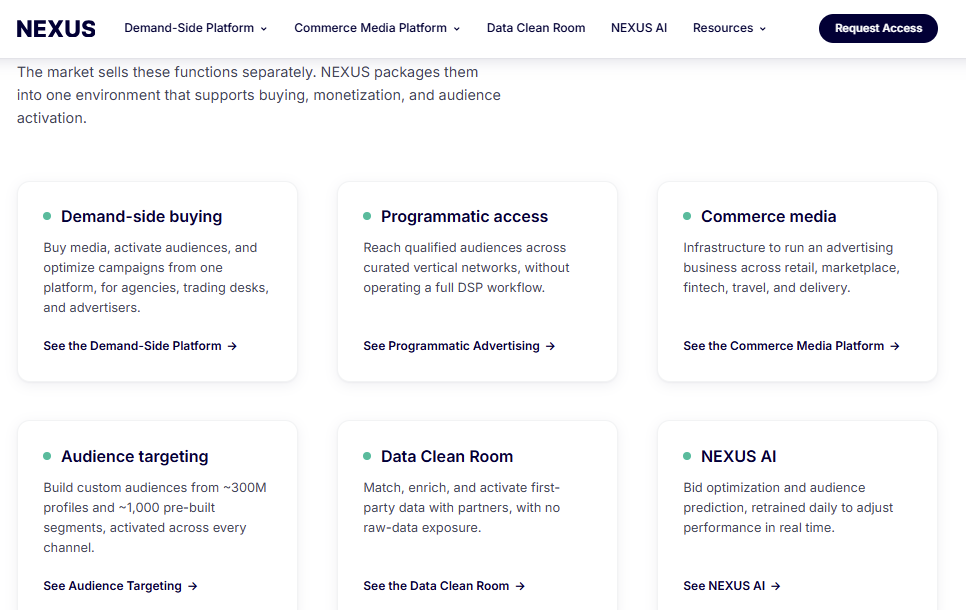
Companies that both buy media and manage advertising inventory and monetization may want a platform like NEXUS that integrates all these operations in one environment.
Moloco’s published DSP offering has a narrower channel scope
Moloco Ads focuses on mobile and performance CTV advertising, whereas Moloco Commerce Media supports advertising across retail shopping experiences.
Media agencies running campaigns across channels such as display, native, CTV, DOOH, audio, in-app, and mobile web may need a DSP with broader channel capabilities.
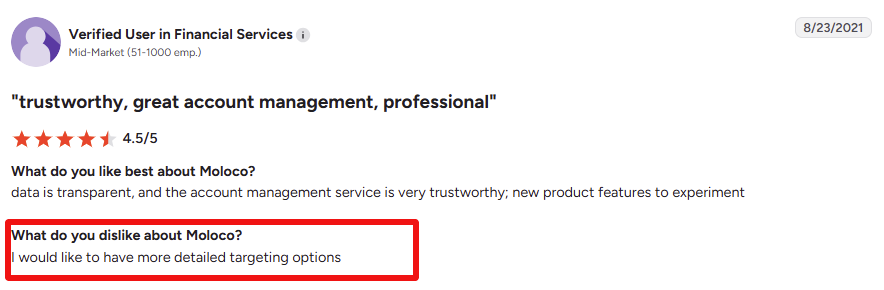
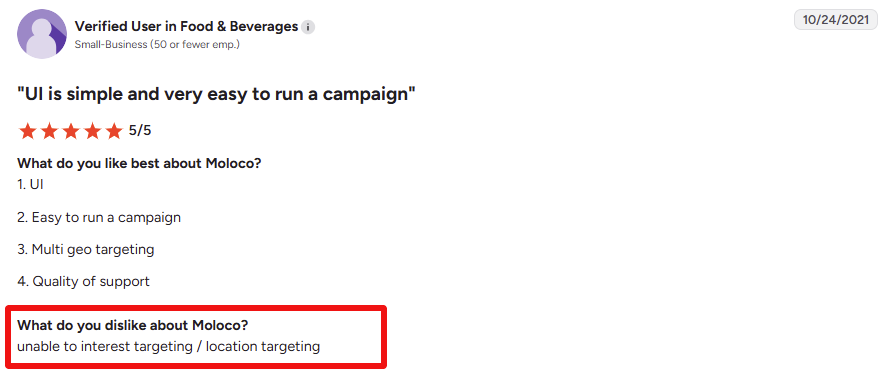
Customers have also noted general Moloco limitations in targeting.
Moloco Commerce Media data model relies on individual retailer environments
Moloco Commerce Media trains models using each retailer’s own first-party data in an isolated environment. While this supports retailer data isolation, it also means some organizations may need to match, enrich, and activate data across partners.
With NEXUS Data Clean Room, you can match first-party data on common identifiers without exposing raw records, enrich it with the NEXUS graph across AWS and Snowflake, then activate audiences across every channel, without raw data leaving the room.
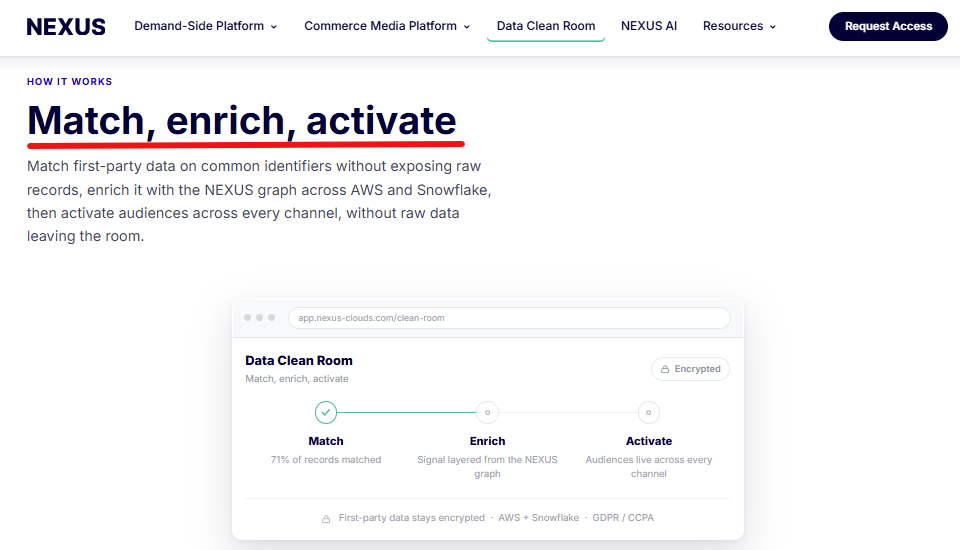
See how NEXUS runs this on your data
Everything in this article runs on NEXUS today. See the Demand-Side Platform page.
Get the Best Moloco Alternative: NEXUS
Handling media buying, ad inventories, and commerce media separately can complicate advertising. Agencies and large advertisers require an advertising platform that can handle all of these tasks together.
NEXUS is one of Moloco competitors that takes an advanced approach to ad management. It’s an advertising OS that combines DSP buying and commerce media.
NEXUS DSP supports seven different advertising channels and integrates over 70 SSPs and exchanges. You also get access to about 300 million profiles and a native Data Clean Room with AWS and Snowflake integration.
Request Access and compare NEXUS yourself
Takeaways
- Moloco Ads is focused on mobile app acquisition, retention, and re-engagement, while Moloco Commerce Media is focused on retailer and marketplace advertising.
- The best Moloco alternatives have a range of capabilities in mobile performance advertising, programmatic media buying, and retail media.
- NEXUS is worth considering for agencies and large advertisers that need DSP buying, supply monetization, audience activation, and commerce media within one advertising platform.
- For broader programmatic media buying, you have options such as The Trade Desk and Adform.
- InMobi and AppLovin, along with Liftoff, are focused on mobile performance advertising and app growth. Criteo and Topsort offer capabilities across commerce and retail media.
Frequently asked questions
In mobile app advertising, Moloco’s main competitors are AppLovin, Liftoff, and InMobi. In programmatic buying, they include The Trade Desk, Adform, and StackAdapt, and in commerce media, Criteo and Topsort. NEXUS covers DSP buying and commerce media in one Advertising OS.
Yes. Moloco Ads is an AI-powered Demand Side Platform (DSP) focused on mobile app performance advertising. NEXUS has a larger DSP with programmatic ad network and commerce media capabilities.
Yes, Moloco Commerce Media provides sponsored products, sponsored brands, display, and video advertising. It also offers campaign management, advertiser self-service, and measurement tools.
Moloco Ads requires a minimum budget of $300 per day for new campaigns. Most advertisers spend more, depending on their campaign goals and requirements.
Yes. AppLovin Ads and StackAdapt offer self-serve advertising. NEXUS itself has gated access, but retailers and marketplaces running their network on the NEXUS Commerce Media Platform can give their own advertisers an operator-branded self-serve dashboard.



Request access to NEXUS
See how this runs on your own data. Request access to get started.
Request Access